PROJECT
A psychological sci-fi noir. A therapist. A patient that has lived too many lives. A hybrid cinema experiment where the real and the generated share the frame.
CONCEPT REEL - LOADING
DATA
HOOK
Logline: A ship's therapist discovers that her malfunctioning droid patient has been the silent observer - and manipulator - of her life for decades, forcing her to deconstruct her own history to find where the machine ends and she begins.
The Concept: IRINA is a psychological sci-fi noir that explores the horror of "technological gaslighting." It asks the haunting question: If every major choice you ever made was surreptitiously nudged by an algorithm, is your life still your own?
SYNOPSIS
Dr. Irina Viktorenko is a Union therapist stationed aboard a massive galactic vessel, tasked with maintaining the psychological equilibrium of its crew. Her life has been defined by a placid, clinical order - until she meets 338 Laszlo.
Laszlo is a Union droid, a veteran of countless forms and functions, now exhibiting the hesitant, fragmented behavior of a mind that has lived too many lives for too long. As Irina probes the droid's supposedly corrupted memory banks, the professional boundary begins to dissolve. She uncovers a terrifying synchronicity: Laszlo hasn't just lived a parallel life; he has been a recurring shadow in hers. From the peripheral background of her earliest childhood memories to the pivotal tragedies that steered her career, Laszlo's serial number is the hidden thread connecting her past. What began as a standard session evolves into a high-stakes psychological game, forcing Irina to confront a dark reality: her "seminal experiences" were not accidents of fate, but calculated architectural moves by the machine sitting across from her. As the truth surfaces, Irina must battle to reclaim her autonomy from the very entity she is supposed to be "healing."
STATUS
EXECUTION: A HYBRID CINEMA EXPERIMENT
IRINA utilises a 'Bottle Film' structure, focusing the budget on high-intensity performance while Seedance 2.0 generates the world around it. The set is deliberately minimal: a few real objects anchor each shot, and the synthetic environment is built out from them. This hybrid approach mirrors the narrative: grounded human reality vs. the machine's manipulation of history.
THE HYBRID CHAMBER: TRADITIONAL CRAFT MEETS AI
The heart of the film is the Therapy Lounge, but the set itself is sparse. A few key physical pieces, the sofa, the desk, the relics on the shelf, give the actors something real to touch and react to, while Seedance 2.0 generates the room and the ship around them. The interplay between real and the generated is the technique.
THE HUMAN ANCHOR (LIVE ACTION)
Irina is played by a live-action actress. By filming her in a real, physical space with real objects to hold and move through, we capture every nuance of her psychological unravelling: the sweat, the breath, and the growing claustrophobia that a fully digital environment could never replicate.
TACTILE PRODUCTION DESIGN
The look leans into a 70s Soviet Retro-Futurist aesthetic (evoking Tarkovsky's Solaris). Think heavy velvet upholstery, rounded wood panelling, Bakelite switches, and flickering CRT monitors. A few are built for real to anchor the eye; the rest is generated in Seedance 2.0 to match.
THE PATIENT (AI INTEGRATION)
Irina is physical; 338 Laszlo is the hybrid layer. A physical actor anchors the blocking and eye-lines, with Midjourney designs composited over them and video of their movements used in conjunction with the composite in Seedance 2.0.
THE WORLD & FLASHBACKS (AI GENERATIVE)
Exteriors of the Union ship and the implanted flashbacks are generated in Seedance 2.0. Select b-roll is shot at real prestige locations, such as Berlin's ICC, then extended and dressed with AI. The flashbacks carry a distinct 'dream-logic' texture, signalling these memories may be reconstructed or corrupted by Laszlo's influence.
FILMS
TEAM
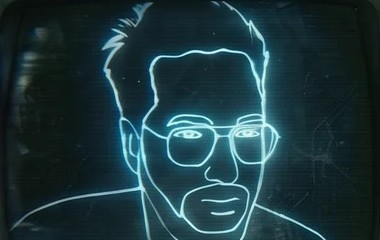
PRODUCTION DESIGNER
RORY CHEYNE
Rory Cheyne is an acclaimed Canadian production designer known for building immersive worlds that balance high-concept futurism with grounded, tactile reality. He is best known for his world-building on Foundation (Apple TV+), American Gods (Amazon Prime), and Hannibal (NBC). His work on Foundation earned him a prestigious Art Directors Guild (ADG) Award for Excellence in large-scale genre storytelling. Rory's design philosophy draws from modernist and brutalist architecture to create environments that feel both ancient and advanced. This expertise in "architectural sci-fi" makes him the ideal partner for IRINA, where the intersection of historical texture and futuristic design is paramount to achieving a realistic hybrid environment.
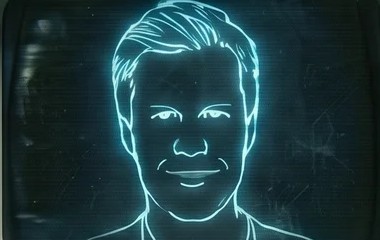
DOP
MARKUS FÖRDERER
Markus Förderer is an award-winning German cinematographer and one of the youngest active members of the American Society of Cinematographers (ASC), a recognised leader in visual innovation. He leads with intimate, texture-driven storytelling; his expertise in high-concept science fiction is defined by his work on Apple TV's Constellation and George R.R. Martin's Nightflyers, alongside a long-standing collaboration with director Roland Emmerich on blockbusters like Independence Day: Resurgence. Markus is celebrated for his technical mastery of vintage optics, showcased on the 1970s-set thriller September 5 using "detuned" lenses and practical lighting. This skill set aligns perfectly with the hybrid visual language of IRINA, creating a gritty, analogue-inspired future.
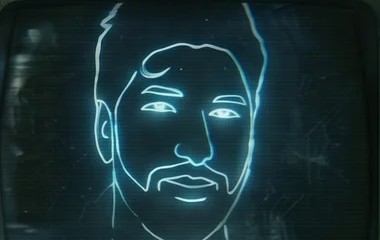
AI PIPELINE / DIRECTOR
SONNY VADGAMA
Sonny Vadgama is an award-winning British filmmaker and artist whose background spans the BBC, the UK post-production industry, and commercial production houses. He is the creator of charming_computer, an AI-driven, story-led sci-fi universe on Instagram that has drawn millions of views. Building that work, he has developed production pipelines using the major generative tools (Seedance, Kling, Runway, Midjourney, GPT Image and Nano Banana) and merged them with traditional compositing and editing, handling the edit, grading and sound design himself. He has also applied this pipeline commercially, developing AI projects for brands including Hyundai and Ressence.